Request for information
 Tsukimi GalleryTsukimi Gallery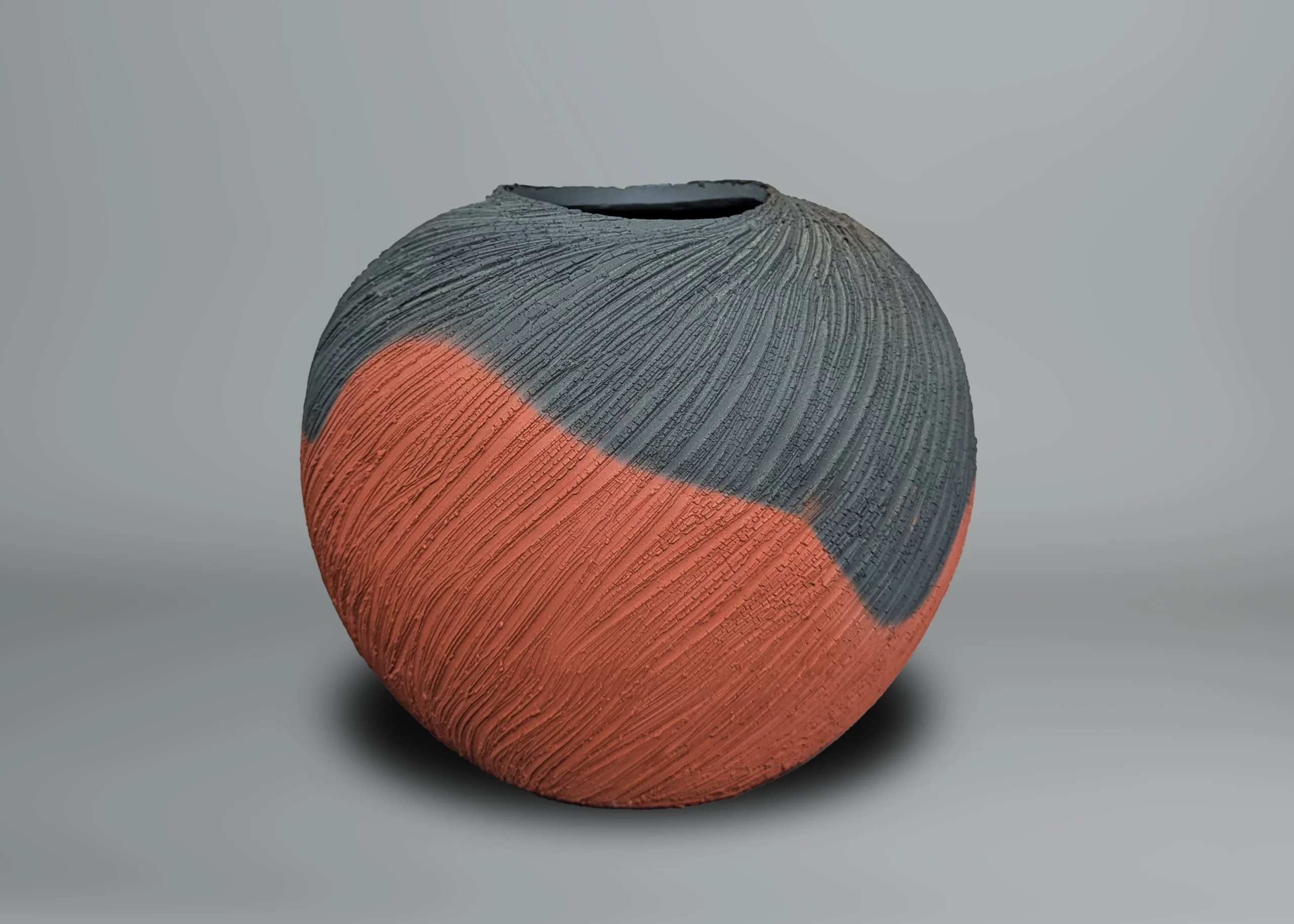
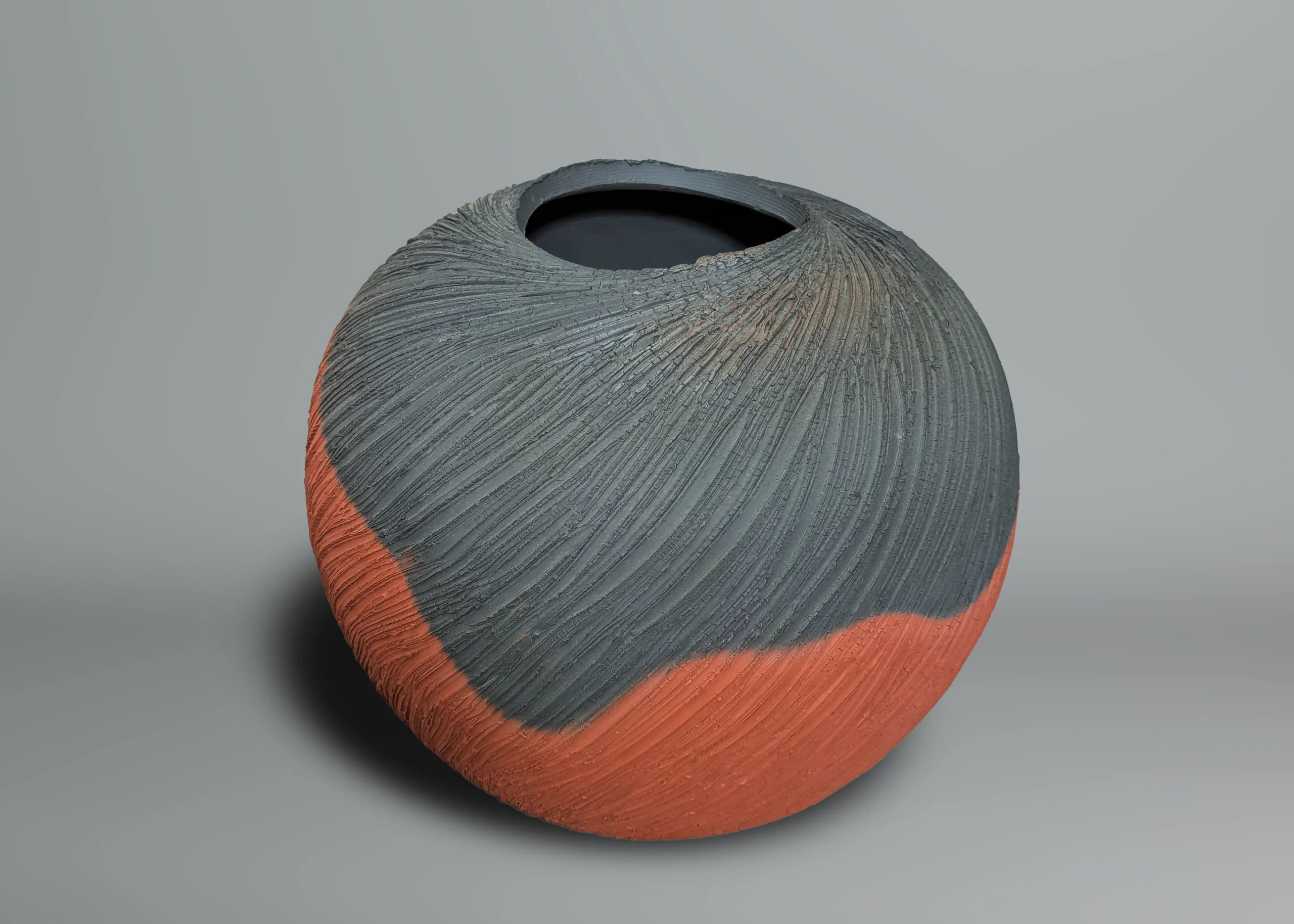
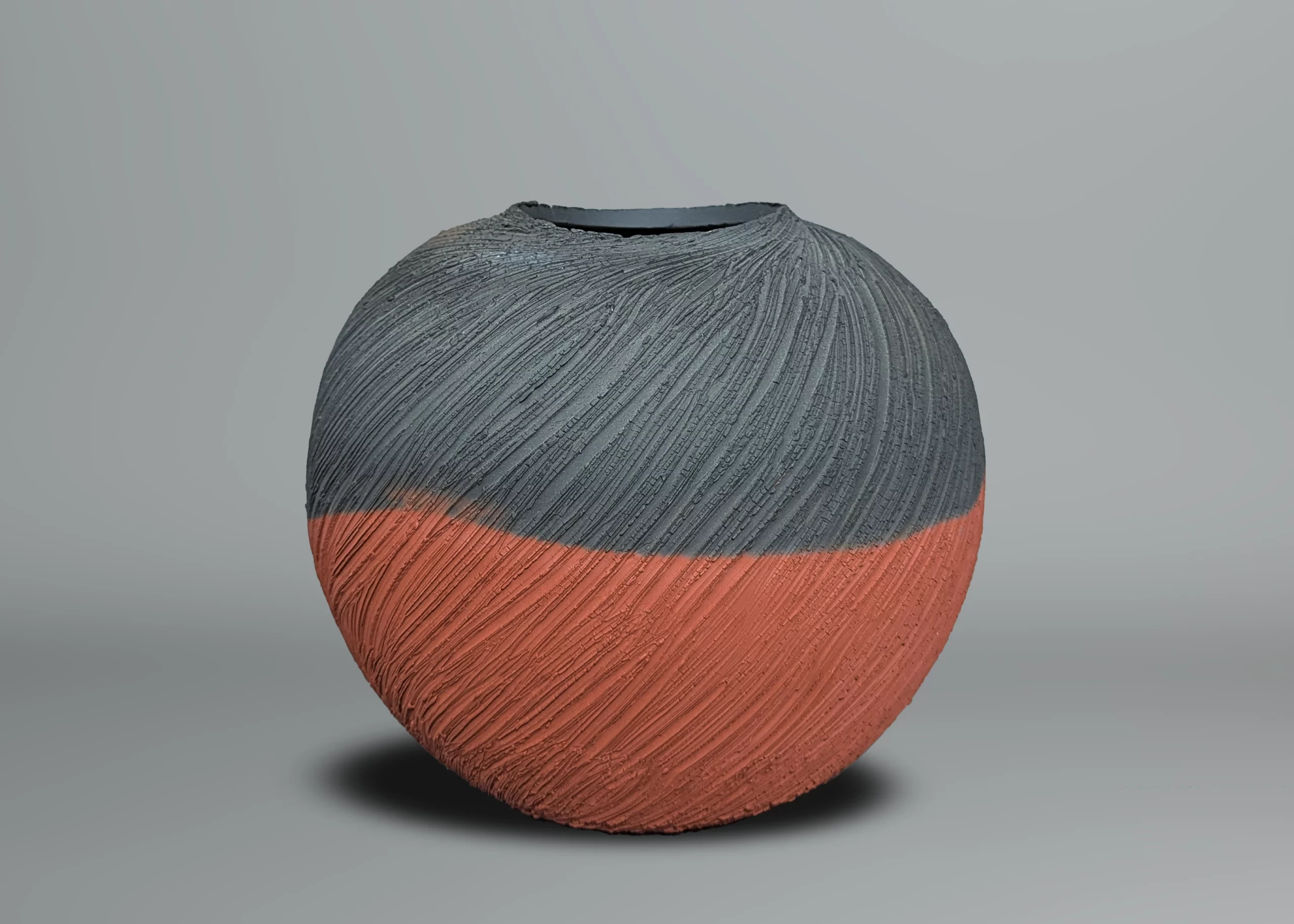
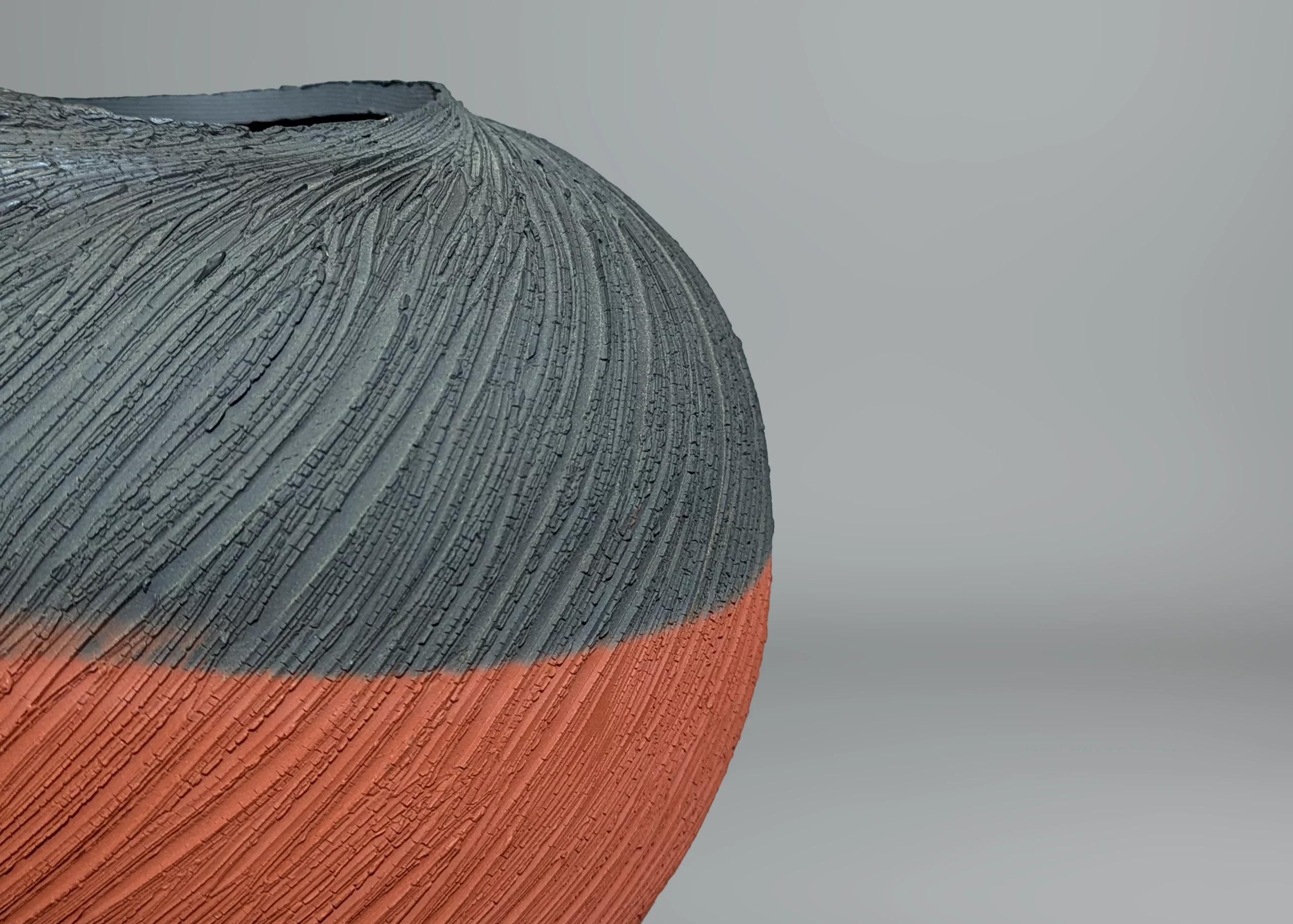
A globular Mumyoi ceramic vase displaying a striking contrast between red and black tones. The surface is enlivened by a combed decoration of deep grooves that follow the curve of the vessel in a dynamic movement.
Signed under the base. Preserved in its original tomobako
Heisei era (1989-2019)
Dimensions : H. 20 cm ; Diam. 23 cm.
Public collections : Metropolitan Museum of Art, New York ; Victoria and Albert Museum, Londres ; Art Institute of Chicago ; National Museum of Modern Art, Tokyo ; National Crafts Museum, Tokyo
2 600,00 €
About Itō Sekisui V (b. 1941)
Born in 1941 on Sado Island, Niigata Prefecture, Itō Sekisui V is the heir to a lineage of potters specializing in Mumyoi-yakia local ceramic tradition employing an exceptionally iron-rich clay. After studying at the Kyoto Institute of Technology, he joined the family workshop in 1966 before officially succeeding his father in 1977 as the fifth bearer of the name Itō Sekisui.
While preserving the traditional techniques of Mumyoi ware, he profoundly renewed its artistic expression by exploring the possibilities offered by this unique clay. Depending on the firing conditions, it develops distinct tones: red in an oxidizing atmosphere and black in a reducing atmosphere. Itō Sekisui V is particularly renowned for integrating these natural transformations of the material into the very core of his artistic practice.
Honoured on numerous occasions at Japan's leading exhibitions devoted to decorative arts and ceramics, he notably received the Grand Prize at the Japan Ceramic Art Exhibition in 1985. In 2003, he was designated a Living National Treasure of Japan for his exceptional contribution to the preservation and development of the Mumyoi tradition. He was further awarded the Medal with Purple Ribbon in 2005, an imperial distinction recognising outstanding achievements in the arts and academia, and theOrder of the Rising Sun, Gold Rays with Rosette,in 2011, one of Japan's highest civilian honours.